
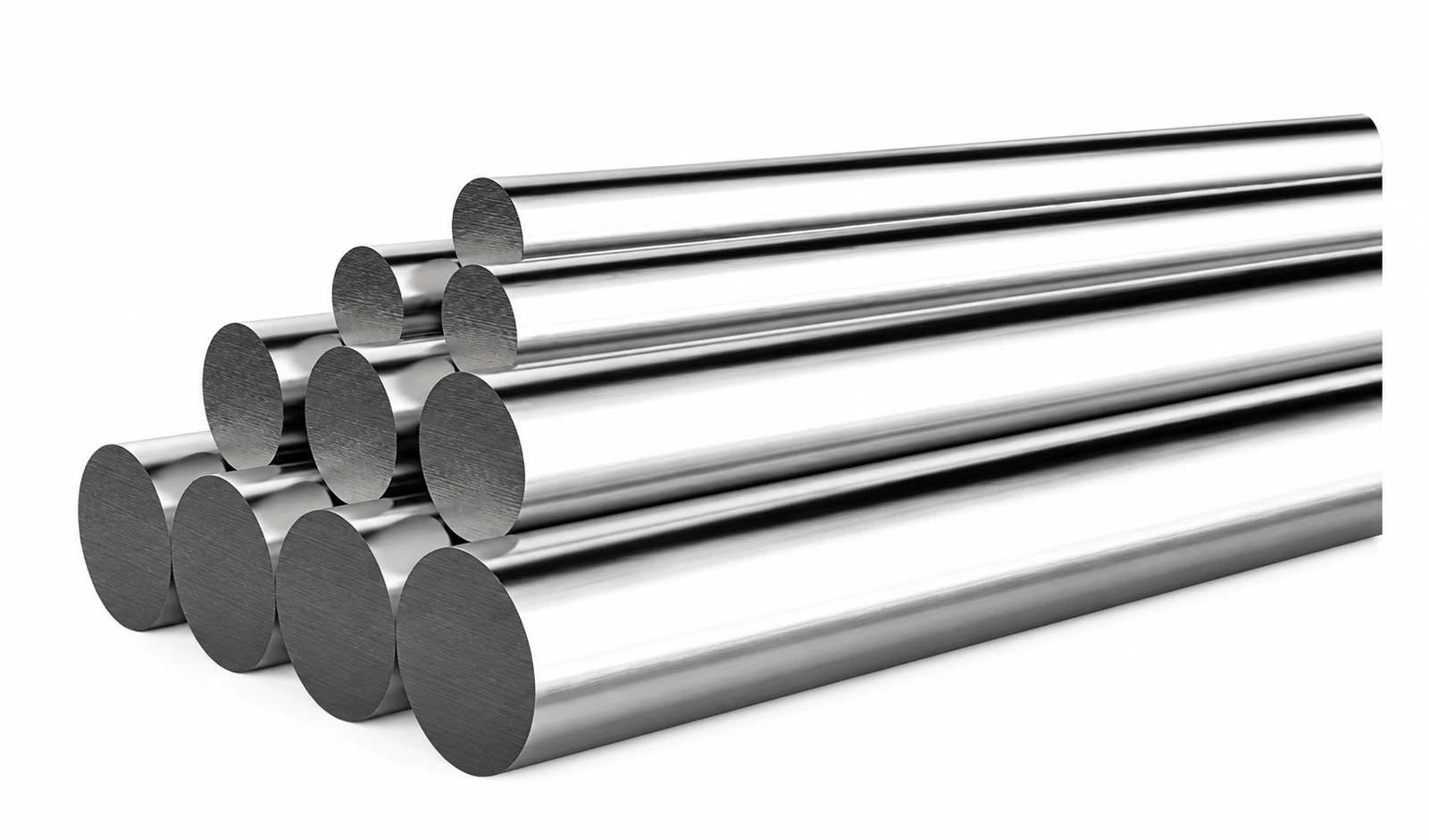
STAINLESS STEEL MATERIALS

Martensitic Stainless Steel

Compare martensitic grades for machined and heat-treated components, with hardness, strength and corrosion exposure considered together. Include the delivery condition, machining sequence and final heat-treatment requirements in your enquiry.

Grade Directory

Open a grade to compare its characteristics, uses and processing needs. Choose a product within that entry to carry the grade into your specification.

Grade Characteristics & Selection

410Basic hardenable martensitic stainless steel

Material Characteristics

410 is a martensitic stainless steel selected for a balance of strength and moderate corrosion resistance.

Typical Uses

It is used for mechanical parts and fabricated components that require a specified heat-treated condition.

Processing and Delivery

Choose annealed material or a heat-treated condition to suit the part. Include the later forming, machining and heat-treatment sequence in your enquiry.

Comparing Grades

410 gains strength through heat treatment. It differs from non-hardenable ferritic 430 and from the higher-hardness selection focus of 420.

416Free-machining martensitic grade

Material Characteristics

416 combines free-machining characteristics with the ability to harden through heat treatment.

Typical Uses

Typical uses include machined shafts, fittings and small mechanical parts.

Processing and Delivery

Your machining plan, final hardness and heat-treatment stage help define the material condition. Include any welding or severe forming before the order is agreed.

Comparing Grades

416 emphasizes machining compared with basic 410. Unlike ferritic 430F, it is a hardenable martensitic grade.

420Martensitic grade for hardness and wear requirements

Material Characteristics

420 is a hardenable martensitic grade used where hardness, wear resistance and a finished surface are important.

Typical Uses

Typical uses include cutting parts, mould components and wear-exposed mechanical items.

Processing and Delivery

Your material specification, forming or machining plan and final heat treatment define the requirement. A polished appearance and final hardness need to be stated separately.

Comparing Grades

420 covers a different hardness and wear balance from 410. Keep 420J2 separate when the drawing specifies that exact designation.

420J2Martensitic sheet and strip grade for cutting components

Material Characteristics

420J2 is a martensitic grade used for formed parts that subsequently require heat treatment and cutting performance.

Typical Uses

Typical uses include blades and other cut or stamped components.

Processing and Delivery

Specify the exact grade, forming condition, final heat treatment and edge-finish requirements. State whether delivery is before or after the customer’s hardening process.

Comparing Grades

420J2 is kept as its own designation. Compare it with the specified 420 material instead of assuming a direct equivalence.

431Hardenable martensitic grade for loaded mechanical parts

Material Characteristics

431 is a martensitic stainless steel that can be quenched and tempered to balance hardness, strength and toughness.

Typical Uses

Common uses include shafts, valve stems, fasteners and other mechanically loaded components.

Processing and Delivery

Your required heat-treated condition, machining sequence and inspection criteria define the final material requirement; the grade name alone does not specify mechanical properties.

Comparing Grades

431 is heat treatable, unlike general-purpose austenitic grades such as 304. Its selection should address both the mechanical duty and the actual corrosion exposure.

440CMartensitic grade for high hardness and wear

Material Characteristics

440C is selected for high hardness and wear resistance in a hardened and tempered condition.

Typical Uses

Typical uses include bearing components and precision wear parts.

Processing and Delivery

Identify the required heat-treated state, finishing sequence and dimensional control after hardening. For sheet enquiries, include the component drawing and cutting requirements.

Comparing Grades

440C has a different hardness and fabrication balance from 410 or 420. Ease of forming in the supplied state and final wear performance are separate considerations.

Delivery Condition and Purchasing Requirements

Specify the heat-treatment or ageing condition and target hardness required for the selected grade and finished part.

Your dimensions, surface finish and planned forming or welding help complete the material requirements for your part.

Include the required product standard, tolerances and inspection documents. We review the grade, product form and material condition together for the order.

Contact Sales

Share your part drawing and any known grade, material condition or hardness requirement. Add the dimensions, quantity and destination, and we can discuss the remaining details with you.