






Magnetron Sputtering
Material is transferred from a target to the strip in a controlled vacuum process.
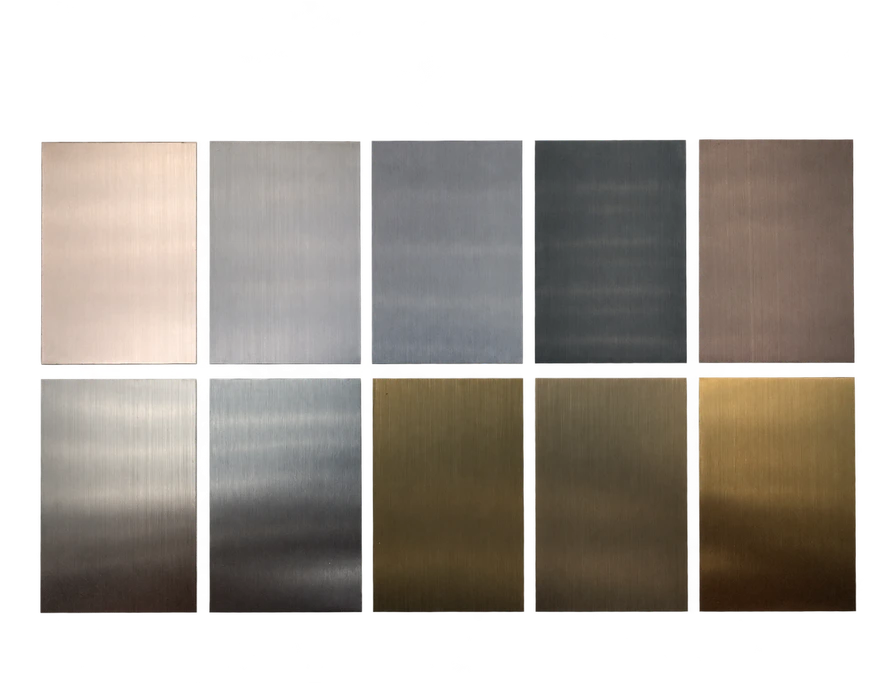
DECORATIVE COATINGS
A vacuum-deposited coating adds metallic colour to stainless steel while retaining the selected base-surface appearance. Specify the substrate, colour sample and subsequent forming requirements together.
Include the exact grade, base finish, treated face, colour reference and intended bending or stamping. Agree the finished appearance using a physical sample.
CIELAB coordinates describe the colour range of the decorative coating reference. Select relevant tests and agree the sample, method and acceptance criteria for your order.
| Test | Conditions | Reference result |
|---|---|---|
| Cross-cut adhesion | Cross-cut test | Class 0; no coating detachment |
| Pencil hardness | Pencil test | 6H |
| Bending | T-bend test | ≤6T |
| Abrasion | 40 cycles | No visible marking |
| Alcohol rub | 500 cycles | No visible marking |
| MEK rub | 300 cycles | No visible marking |
| Heat ageing | 180°C for 3 hours | ΔE* ≤1.5; no coating detachment |
| Heat ageing | 90°C for 500 hours | ΔE* ≤1.5; no coating detachment |
| Hot-water exposure | 90°C for 2 hours | ΔE* ≤5.0; no coating detachment |
| Constant temperature and humidity | 50°C, 95% relative humidity, 336 hours | ΔE* ≤5.0; no coating detachment |
| Continuous neutral salt spray | 480 hours; no diagonal scribe | ΔE* ≤2.5; no coating detachment or rust |
| Chemical resistance | 10% acetic acid, 10% sulfuric acid or 5% sodium hydroxide; immersion at 50°C for 24 hours | Class 0; no coating detachment |
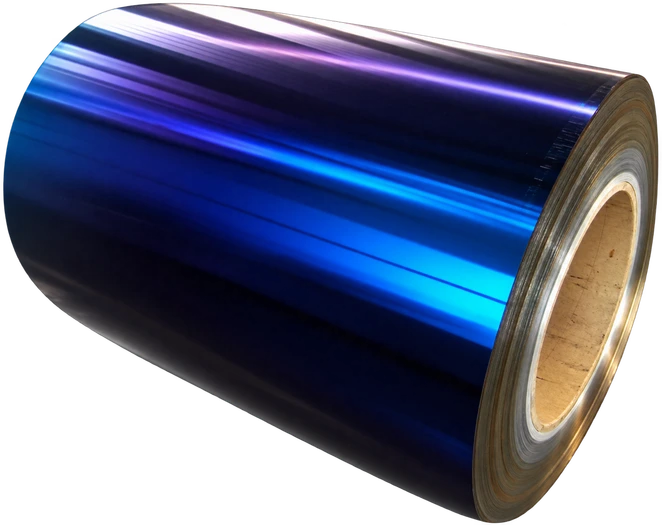
FUNCTIONAL COATINGS
A selective blue coating on copper or aluminium strip absorbs solar energy while limiting thermal emission. Substrate choice and coating performance are specified for the intended solar-thermal component.
Specify the substrate, dimensions, absorber design, operating conditions and required optical test method. Include joining and any further forming after coating.
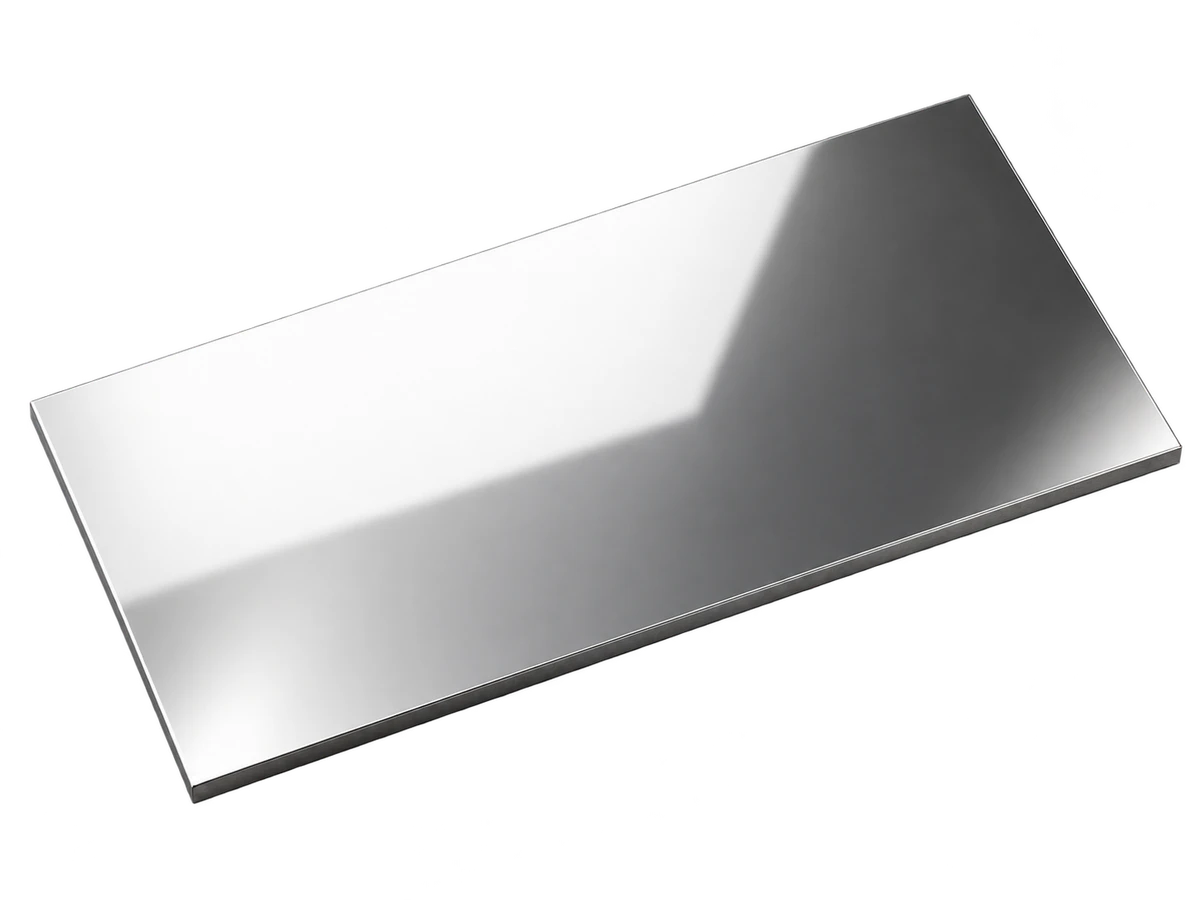
FUNCTIONAL COATINGS
Aluminium-mirror and silver-mirror coating systems provide different reference reflectance levels. Define the substrate and the required optical response for the finished reflector or component.
Include the substrate, coating system, wavelength range, reflectance measurement method and forming requirements. Specify whether acceptance applies before or after fabrication.
PROCESSING
Metal strip passes through controlled vacuum sections before returning to coil form. The deposition technology and coating sequence depend on the selected coating system.
The strip is unwound and fed into the coating line.
The strip enters the vacuum environment through a controlled lock section.
Plasma treatment prepares the substrate surface before deposition.
The selected coating is deposited using the specified vacuum-coating technology.
The coated strip passes from the vacuum sections back to atmospheric conditions.
The coated strip is rewound for the specified protection and delivery arrangement.
The required film system determines which deposition technology is used.
Material is transferred from a target to the strip in a controlled vacuum process.
An electron beam evaporates the coating material for deposition onto the substrate.
Optical measurement, strip transport, vacuum pumping, process-gas supply and line controls support the coating operation. Specify the measurements and records required for your order.
Stainless steel substrate
Protective-film removal
PVD colour coating
Protective-film application
Inspection and packaging
An anti-fingerprint topcoat is a separate finishing requirement after decorative PVD coating. Removable protective film and coil interleaf covering are specified separately from the deposited coating.
PURCHASING DETAILS
Send a drawing, sample reference or written specification alongside the following information.
Decorative PVD can be included in a coil or sheet enquiry. Select the product form and provide the coating requirements alongside your material specification.
COATING QUESTIONS
Start with the finished component. Decorative PVD is specified by substrate, base finish, colour and appearance. Solar-absorber and high-reflective coatings also require optical performance and test conditions to be defined.
The reference table gives 95% ± 1% for the aluminium-mirror system and 98% ± 1% for the silver-mirror system. Include your required minimum, wavelength range and test method so the acceptance criteria can be agreed for the order.
Share the intended bending, stamping, cutting or joining operations and a drawing where available. We review the substrate and coating with those processing needs, using the finished appearance and relevant tests for sample approval.
Specify these separately. The deposited coating provides the selected surface treatment; an anti-fingerprint topcoat remains on the finished surface, while removable film and coil interleaf covering serve handling and protection requirements.
Loading your request…